
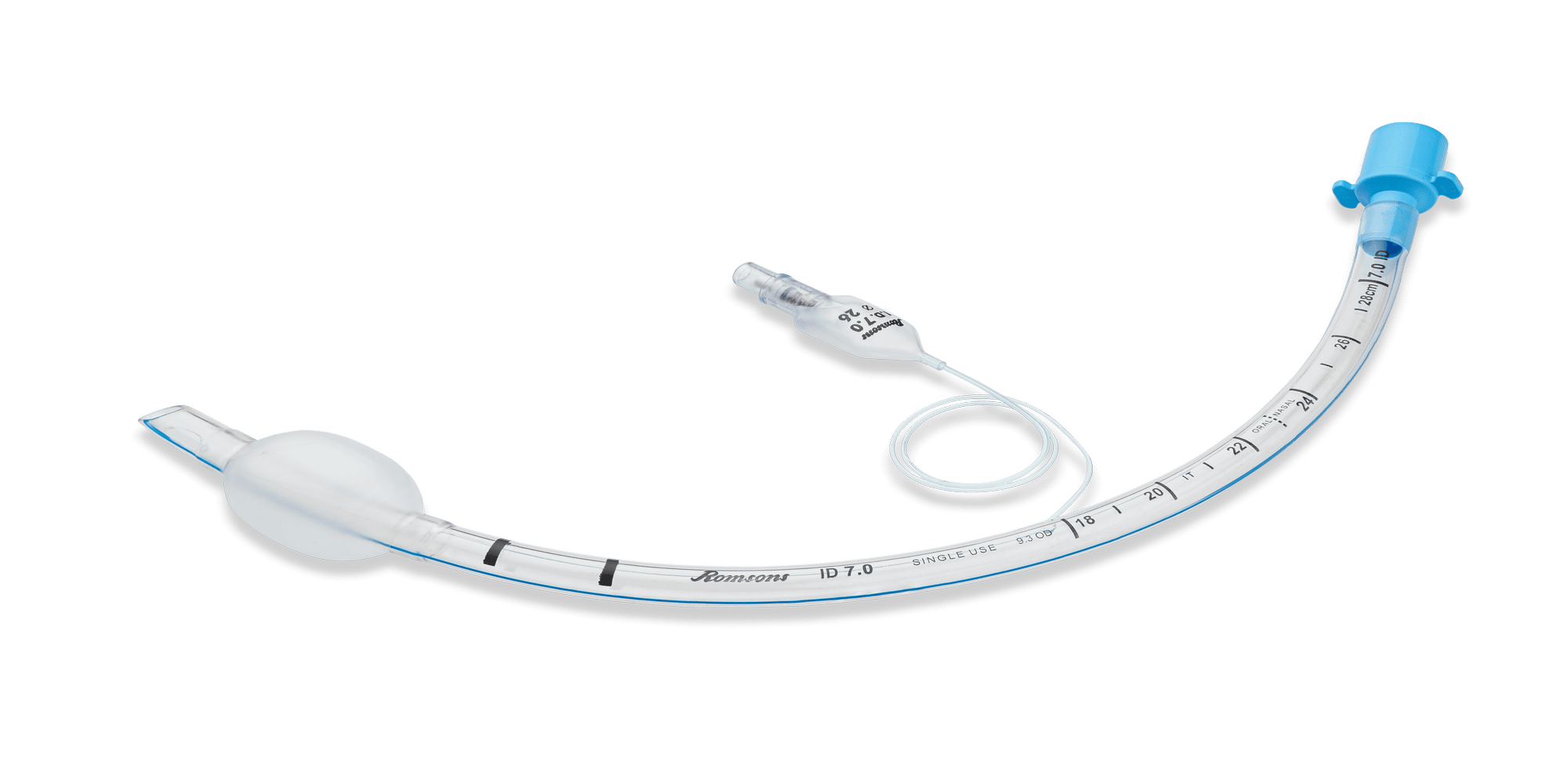
Endotracheal Tube
An endotracheal tube (ET tube) is a flexible plastic tube that is inserted through the mouth (or sometimes the nose) into the trachea (windpipe) to help a person breathe.
Endotracheal Tube Details
-
Used For
- Airway protection (prevents aspiration of vomit or fluids)
- Mechanical ventilation (connected to a ventilator to support breathing)
- During surgery (especially under general anaesthesia)
- Emergency situations (like cardiac arrest or severe trauma)
-
Key Features of the Tube
- Made of soft plastic (usually PVC)
- Has a cuff near the end that inflates to seal the airway
- Markings to guide depth of insertion
- Connector to attach to oxygen or ventilator
-
Types
- Orotracheal (through the mouth) - Most common
- Nasotracheal (through the nose)
- Cuffed vs. uncuffed (depending on patient age and condition)
-
Complications
- Sore throat or hoarseness
- Injury to teeth or vocal cords
- Misplacement (e.g., into the oesophagus)
- Infection (if used long-term)