
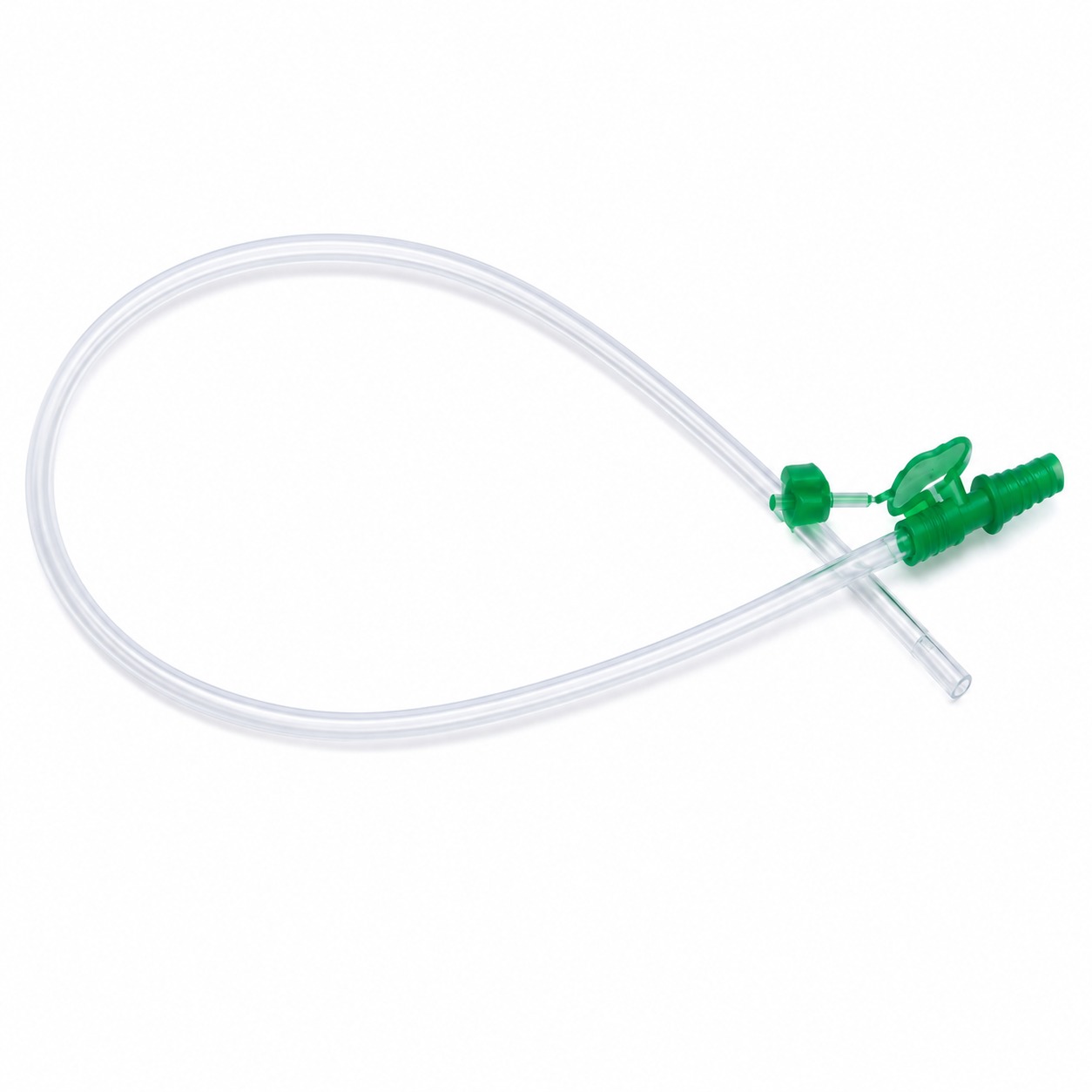
Suction Catheter
Suction catheter is a flexible tube used to remove secretions (mucus, saliva, blood) from the airway, especially in patients with an endotracheal tube or tracheostomy.
Suction Catheter Features
-
Material
- Made of soft, flexible medical-grade PVC or silicone
- Smooth surface to reduce trauma to airway tissues
-
Size (French Gauge - Fr)
- Measured in French (Fr) units
- Common sizes: 6 Fr (infants) to 18 Fr (adults)
- Size selection depends on patient age and airway size
-
Length
- Long enough to reach airway passages (usually 40-60 cm)
-
Tip Design
-
Rounded (atraumatic) tip to prevent injury
- Single central opening
- Multiple side holes (eyelets) for better suction and reduced blockage
-
Rounded (atraumatic) tip to prevent injury
-
Color Coding
- Different sizes are color-coded for identification.
-
Connector
- Universal connector at the proximal end to attach to suction tubing/machine
-
Sterility
- ETO sterilized, disposable (single use) to prevent infection.
-
Control Valve (in some types)
- Thumb-controlled suction port to regulate suction pressure during use.
-
Flexibility & Adequate Rigidity
- Flexible enough to navigate airway curves
- Firm enough to be guided easily.
-
Availability
- Open suction catheter (standard)
- Closed suction system (used with ventilated patients to maintain sterility)
Endotracheal Tube (ET Tube)
An endotracheal tube (ET tube) is a flexible plastic tube that is inserted through the mouth, or sometimes the nose, into the trachea (windpipe) to help a person breathe.
Used For
- Airway protection (prevents aspiration of vomit or fluids)
- Mechanical ventilation (connected to a ventilator to support breathing)
- During surgery (especially under general anaesthesia)
- Emergency situations (like cardiac arrest or severe trauma)
Key Features of the Tube
- Made of soft plastic (usually PVC)
- Has a cuff near the end that inflates to seal the airway
- Markings to guide depth of insertion
- Connector to attach to oxygen or ventilator
Types
- Orotracheal (through the mouth) - Most common
- Nasotracheal (through the nose)
- Cuffed vs. uncuffed (depending on patient age and condition)
Complications
- Sore throat or hoarseness
- Injury to teeth or vocal cords
- Misplacement (e.g., into the oesophagus)
- Infection (if used long-term)